

Kazuo Matsuyama, President and Representative Director, Asahi Breweries, Ltd.
Good fortune will come to those who initiate change, take action, and continue to challenge themselves.
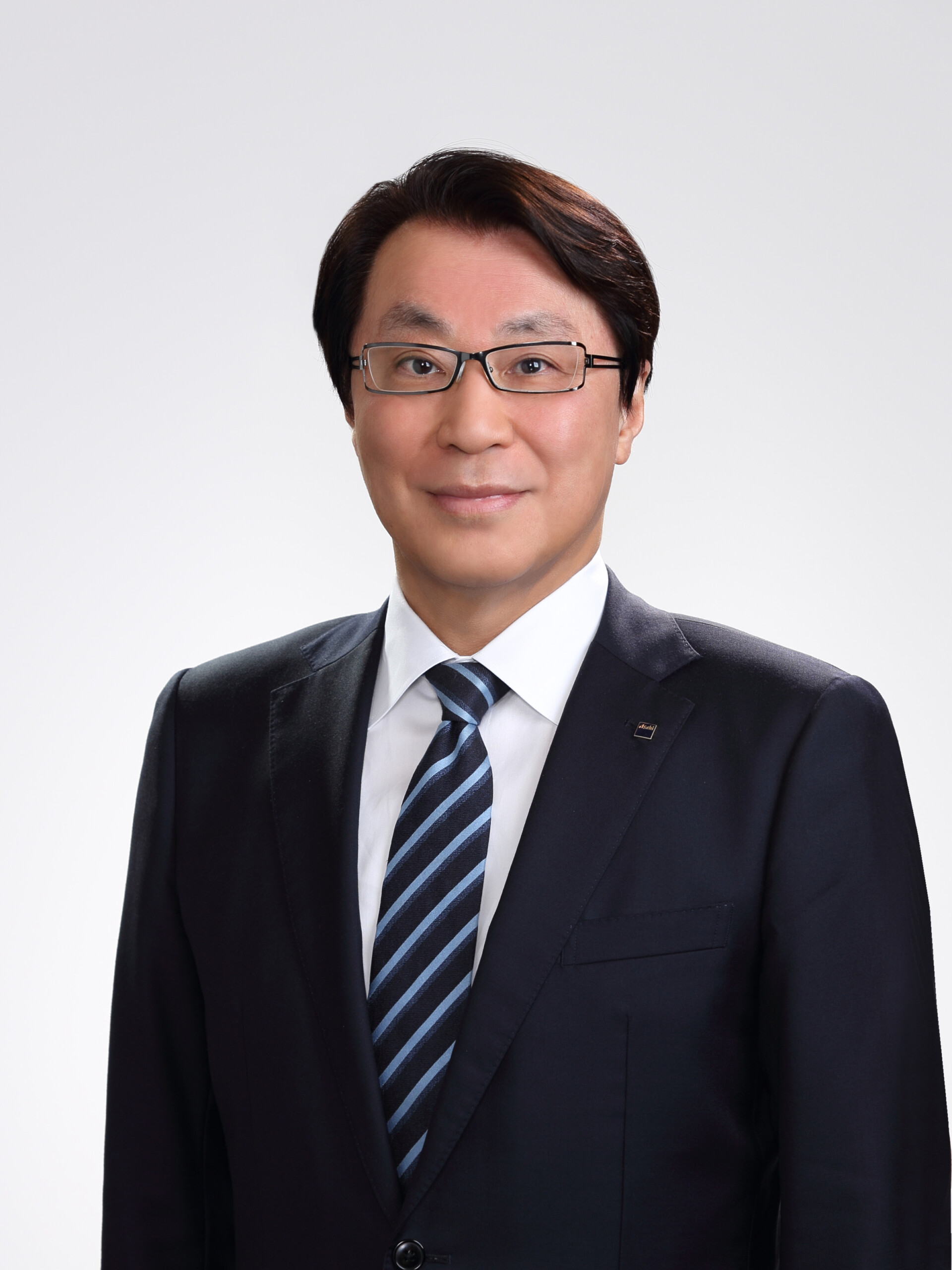
Kazuo Matsuyama, President and Representative Director, Asahi Breweries, Ltd.
■ Profile
Born in Tokyo in 1960. He was engrossed in rugby at Kasukabe High School and in ESS (debate) at Aoyama Gakuin University. After graduation, he joined Kajima Corporation and later moved to Sato Corporation. He then obtained an MBA in the United States, worked for foreign companies such as P&G, and returned to Sato Corporation in 2001. He became president in October 2011. After joining Asahi Breweries in September 2018, he held various positions including head of marketing, and assumed his current position in March 2023.
In an era where lifetime employment was the norm, President Matsuyama has an unusual career path, having worked for five different companies. His driving force is his attitude of "not setting limits for himself." He believes that what will be needed in the coming age are people who can initiate change themselves and enjoy the process. We spoke with President Matsuyama about the importance of taking action and taking on challenges.
During high school, I dedicated myself to rugby and dreamed of pursuing a science-related field of study. While I don't necessarily think that's the case now, when I was considering my future career path, a color vision test pointed out the possibility that my future options might be limited. It was a huge shock at the time, but I changed my mindset and decided to pursue another field I loved: English.
At Aoyama Gakuin University, where I enrolled, I joined the ESS (English Speaking Society) and immersed myself in English debate. This was before the internet existed, and English conversation schools were not yet common. My friends and I would go to the library, scrape together money for photocopying to gather materials, and engage in heated discussions. In debates, we had to construct logical arguments within a limited time and respond to our opponents' counterarguments. Through this experience, I honed my information gathering skills, time management skills, and teamwork abilities. This time, during which we achieved three consecutive national championships, is the foundation of who I am today.
■ The driving force behind a career: "Never setting limits"
During my third and fourth years of university, I participated in a debate exchange program with American university students. The students I met there confidently spoke of clear goals such as "getting an MBA and becoming a business executive" or "changing this industry in the future." I was deeply impacted by their attitude and still vividly remember feeling that I couldn't settle for something small.
After graduation, I had a strong desire to work overseas, so I joined Kajima Corporation. I was involved in a construction project in the Malaysian jungle. Later, at the age of 27, I changed jobs to Sato Corporation and took on the challenge of setting up an overseas factory. Furthermore, at the age of 31, I studied at Northwestern University's Kellogg School of Management, famous in the world of marketing, and obtained an MBA.
After returning to Japan, he worked as a brand manager at P&G and later held positions such as head of the marketing department in Japan at a foreign-owned pharmaceutical company. He then returned to Sato and spent the last six and a half years as president, managing the company.
In an era when lifetime employment and seniority-based systems were the norm, a career that involved working for five different companies was by no means common. However, looking back, I believe the driving force behind it was the "attitude of not setting limits for myself" that I cultivated through debate during my university days and my experiences abroad.
■The DNA of challenge inherited by Asahi Beer
It's been eight years since I joined Asahi Breweries. Asahi Breweries was once so underperforming that it was ridiculed as "Sunset Beer." Then, in 1987, "Super Dry" was launched, revolutionizing the market and leading to a V-shaped recovery. By proposing a new value proposition of "dry" beer, it changed the very concept of beer.
In recent years, the "Draft Beer in a Can," which was created during the COVID-19 pandemic, was a symbolic challenge. In fact, this product was born from combining two discarded ideas that had been lying dormant in the research lab. It was the curiosity and adventurous spirit of those on the ground that brought to life ideas that wouldn't have come to light through customer surveys alone. And next year marks the 40th anniversary of the birth of Super Dry, and we will take on even more new challenges.
What I consistently convey to my employees is the concept of "the customer at the center." I believe that the customer is the most important entity, and that continuously adapting to changing values is what fosters the growth of the brand.
■The future envisioned by SmartDri
One of the things I'm currently focusing on most is "Smart Drinking." Smart Drinking isn't about dividing people into those who drink alcohol and those who don't. It's an initiative that aims to create a society where all adults can choose drinks that they can enjoy in their own way. We want to offer a diverse range of options, including not only alcoholic beverages, but also non-alcoholic beverages, low-alcohol beverages, and even a new category called "adult-tasting beverages."
Our goal is not simply to be a beer-making company, but a company that "creates a good life with beer." We want to be "the most attractive and exciting beer company in the world" and "the beer company of the future that will continue to be loved 100 years from now." To achieve this, we don't want to wait for change to happen; we want to change ourselves.
I believe the most important people in the coming era are those who can embrace change. Not only are they not afraid of change, but they can also enjoy the process of change. In an era where the right answers are unclear, it's crucial to continuously ask yourself questions.
One word I cherish is "serendipity." Good fortune doesn't come to those who simply wait for it. It comes in unexpected ways to those who think hard, act diligently, and continue to challenge themselves. My experience of giving up on a career in science ultimately led to my encounter with English, which dramatically changed the course of my life. Looking back, that setback was the gateway to new possibilities.
■Message
What will be needed from now on are people who have a desire to be of service to others and who enjoy challenges. People who strive to do their best not just for themselves, but for others, can deeply enjoy the work itself. There will be moments when you become so engrossed in something that you realize, "Wow, so much time has passed!" Cherish that feeling, think for yourself, make your own choices, and weave the story of your own life.
Student Newspaper, October 2026 Issue: Chiharu Yamada, 2nd Year Student, Information Management Innovation Professional University
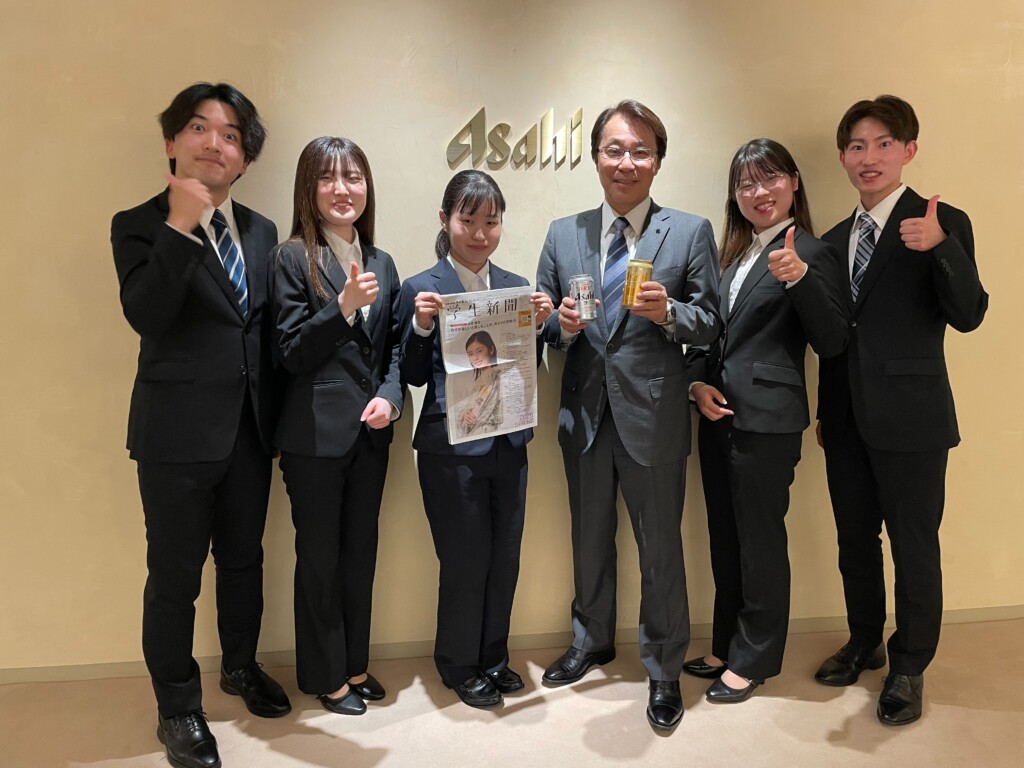
Tatsushi Harada (2nd year, Nihon University) / Mio Ozawa (2nd year, Seijo University) / Haruna Shoji (4th year, Tokyo University of Pharmacy and Life Sciences) / Chiharu Yamada (2nd year, Information Management Innovation Professional University) / Kenta Ito (3rd year, Waseda University)
List of related articles
Sunwells Co., Ltd. President and CEO Ryota Naeshiro
Kazumoto Kanemaru, Mayor of Minami-Alps City
Student newspaper October 2023 issue
Businessman Hiroyuki

CIA Ikumi Isaka / Ryo Kato / Kazuma Kawahara / Ryotaro Sakaguchi

Honda Motor Co., Ltd. (Honda)

2024 Earth Mondamin Cup Pro-Am Tournament
No comments yet.