

Takashi Shigetomi, Chairman and Representative Director, Blackstone Group Japan Co., Ltd.
Aiming to revitalize the Japanese economy through investment management.
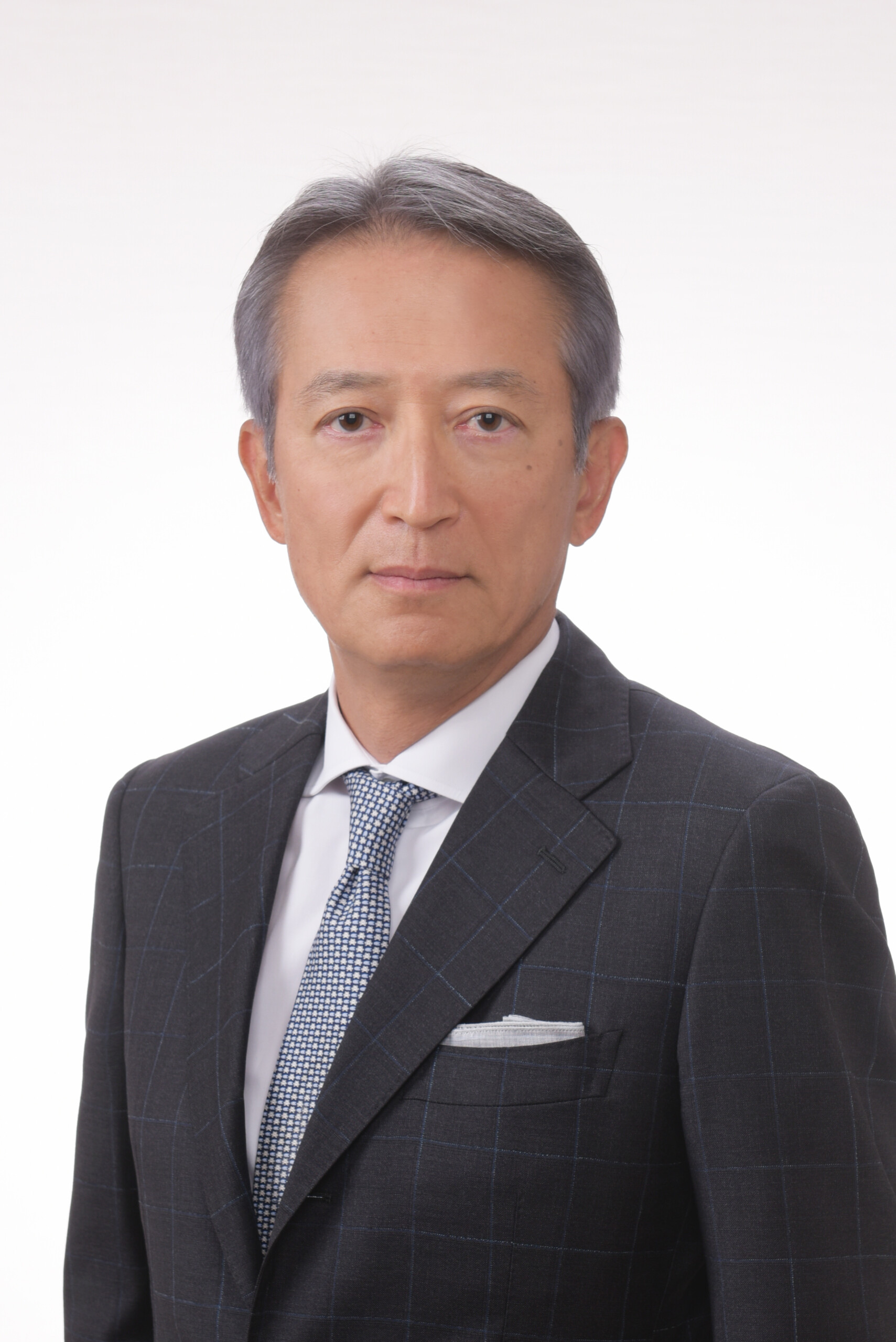
Ryusuke Shigetomi, Chairman and Representative Director, Blackstone Group Japan Co., Ltd.
■ Profile
He joined the Industrial Bank of Japan in 1984. After being involved in the merger of three banks, he joined Morgan Stanley Securities Co., Ltd. (now Mitsubishi UFJ Morgan Stanley Securities Co., Ltd.) in January 2000. After serving as the head of the Telecom, Media & Technology Banking Group in the Investment Banking Division, he became a Senior Managing Executive Officer and Vice Chairman of Morgan Stanley Global Investment Banking in 2016. In November 2021, he became Chairman of the Board of Directors of Blackstone Group Japan, a position he holds to this day.
Blackstone Group Japan, the world's largest alternative asset management company, supports the growth of Japanese companies through investment management. We spoke with Chairman Ryusuke Shigetomi about what measures Japan should take to once again become a leading nation in the global economy, and what the future holds for Japan.
■From the world of banking to the world of investment
I originally intended to become a bureaucrat. However, after hearing about financial institutions and trading companies from one of my close friends, I decided to join the Industrial Bank of Japan (now Mizuho Bank).
Back then, banks still used abacuses to manage cash and deposit accounts, but I started in the deposit department at the Yokohama branch, then moved to the head office's credit assessment department, and finally to the Business Committee. There, I spent about three years working to address the management challenges facing the Industrial Bank of Japan at the time. After gaining various forms of experience in overseas business, I moved to the New York branch to work in project finance. There, I handled a wide range of project finance projects for overseas clients, including power plant construction, crude oil drilling, pipeline construction, and telecommunications infrastructure.
Among the project finance projects I worked on in South America, the OCENSA project, which involved constructing a crude oil pipeline from Colombia to the Caribbean Sea, and the Barracuda project, undertaken by Brazil's state-owned oil company Petrobras, to construct an offshore oil extraction system to extract oil from deep seas, are particularly memorable. Such projects require hundreds of billions of yen in funding, and in many cases, world-leading investment banks such as Morgan Stanley and Goldman Sachs oversee the entire operation. From this experience, I was drawn to the skills that investment banks possess to efficiently execute large-scale transactions, and the environment in which even young employees can work with great autonomy and responsibility, so I decided to challenge myself in investment banking at Morgan Stanley. After working in investment banking at Morgan Stanley for 22 years, I took my current position at Blackstone to actually raise funds from investors and manage investments.
■ To make good companies even stronger and more internationally competitive
We invest in alternative assets, which are private assets distinct from traditional financial assets that are generally traded on the market, such as stocks and bonds. Our investment portfolio has three main pillars: firstly, private equity (PE), which consists of shares in companies not listed on stock exchanges; secondly, individual real estate; and thirdly, private credit (PC), which involves providing funds directly to borrowers without going through financial institutions. In Japan, we started investing in real estate in 2007 and are recognized as a foreign fund specializing in real estate investment, but we are also experiencing accelerating growth in the areas of PE and PC.
In Japan, there are many other companies that manage investments besides ours. We believe that what sets us apart from these competitors is our approach to the companies we invest in. Many investment management companies typically invest in companies that need to be restructured, with the aim of securing profits through restructuring and turnaround. On the other hand, our basic strategy is to invest in companies that are already financially stable, support their growth without the premise of restructuring, and then nurture them into companies with global competitiveness.
In addition to corporate private equity investments, we have focused on the AI field, which is expected to see high growth, for over 10 years, and have been particularly proactive in investing in data centers. Currently, we are one of the world's largest data center development and operation companies, owning a total of more than 10 gigawatts of data centers. Over the next few years, we plan to invest an additional 25 trillion yen and expand our data center-related business through collaborations with "hyperscalers" such as Microsoft, Amazon, and Google.
■What is necessary for Japanese companies to change?
Japanese companies have many employees who are very diligent and hardworking, and they have strengths in technical areas such as manufacturing technology. On the other hand, they are often seen as being resistant to change, blindly respecting precedent and past practices. However, as you all know, society and economic trends are changing moment by moment, so it is necessary for companies to flexibly change their way of thinking and working.
In Japan, I believe the first challenge we should address is increasing the labor share of income for employees, that is, raising wages. Of course, it is not wrong for companies to secure a certain amount of retained earnings to prepare for unforeseen circumstances. However, at the same time, I believe it is crucial to provide employees with sufficient wages, enable them to establish a stable livelihood as soon as possible, and create an environment where they can think about investment and asset management.
In order to grow the Japanese economy, it is necessary to utilize financial assets for growth investment rather than letting them remain dormant. This also applies to household finances. Currently, the total amount of financial assets held by Japanese households amounts to approximately 2300 trillion yen. However, more than half of this is currently stagnant in cash or bank deposits and is not being used for economic growth. Therefore, it is important to establish a path for how to connect dormant financial assets to investment. However, it is not easy for the average person to decide how to invest. That is why we, as investment professionals, believe it is important to provide reliable services to help you direct your valuable financial assets towards investment.
■Message to students
I would like students to think about what they can do to revitalize Japan. In the 1990s, Japan was a world-leading economic power, on par with the United States. However, now its GDP has been surpassed by Germany, placing it in fourth place, far behind the United States and China. Although there are exchange rate issues, indicators such as profitability and labor productivity have fallen to the 30s globally. Japan still has world-leading technologies and industries. I hope that you will examine objective data, think for yourselves about what you can do to improve Japan, and take appropriate risks to invest.
Interviewed by Student Newspaper Online on January 2, 2026 by Kyohei Nakazawa, a second-year student at Waseda University
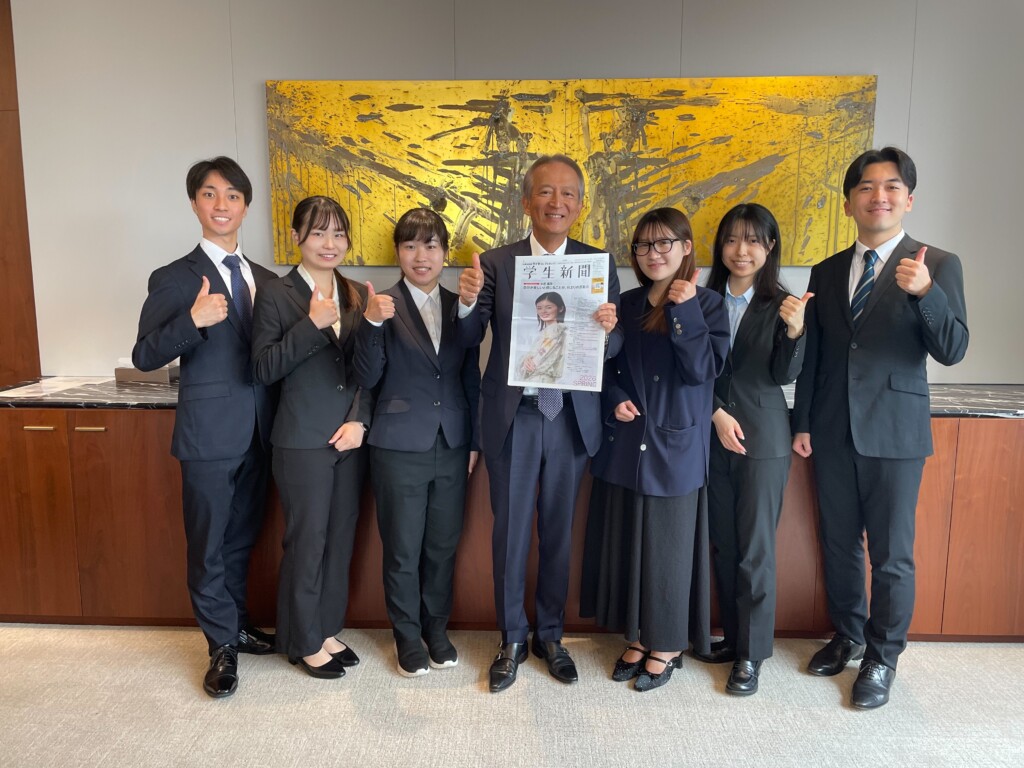
Kyohei Nakazawa (3rd year, Waseda University) / Mayuna Yoshimatsu (4th year, Musashino University) / Haruna Shoji (4th year, Tokyo University of Pharmacy and Life Sciences) / Reina Inomoto (1st year, Kyoto University of the Arts) / Yurie Watanabe (3rd year, Josai International University) / Tatsushi Harada (2nd year, Nihon University)
List of related articles

"Adult Holiday Club" press conference
Kikkoman Soyfoods Corporation Soymilk Meister Kame...

TBS Sparkle Entertainment Inc. Drama Film Division...

Japan Sevens 2024

Former badminton player Wakana Nagahara

Oshiro Maeda: Being an actor is a job that tests your humanity. That's why...

Student Newspaper April 2022 Special Edition
No comments yet.