

Tokyo Metropolitan Consumer Affairs Center "STOP! Consumer Troubles Among Young People" Commercial Script and Video Contest - Traveling Caravan

Hiroka Nagahama, also known as "Ohina-sama," is the ambassador! CM contest - free to enter!
The Tokyo Metropolitan Government is calling for measures to prevent consumer troubles among young people."STOP! Consumer Troubles Among Young People" Commercial Script and Video ContestWe are currently accepting submissions. Submissions are free, and you can submit as many entries as you like. You can participate with just a written script, and the winning entries will be professionally produced and broadcast as commercials on terrestrial television (TOKYO MX).
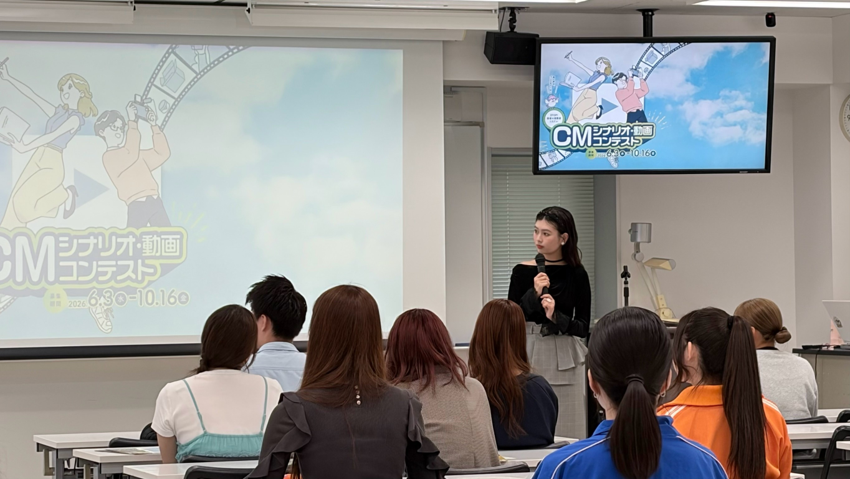
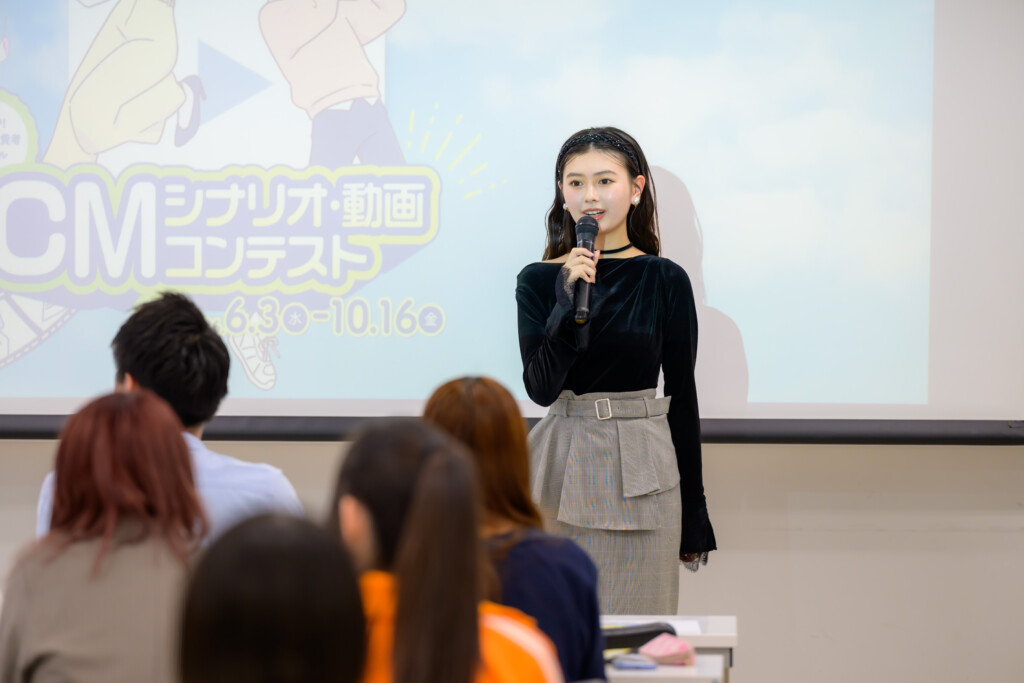
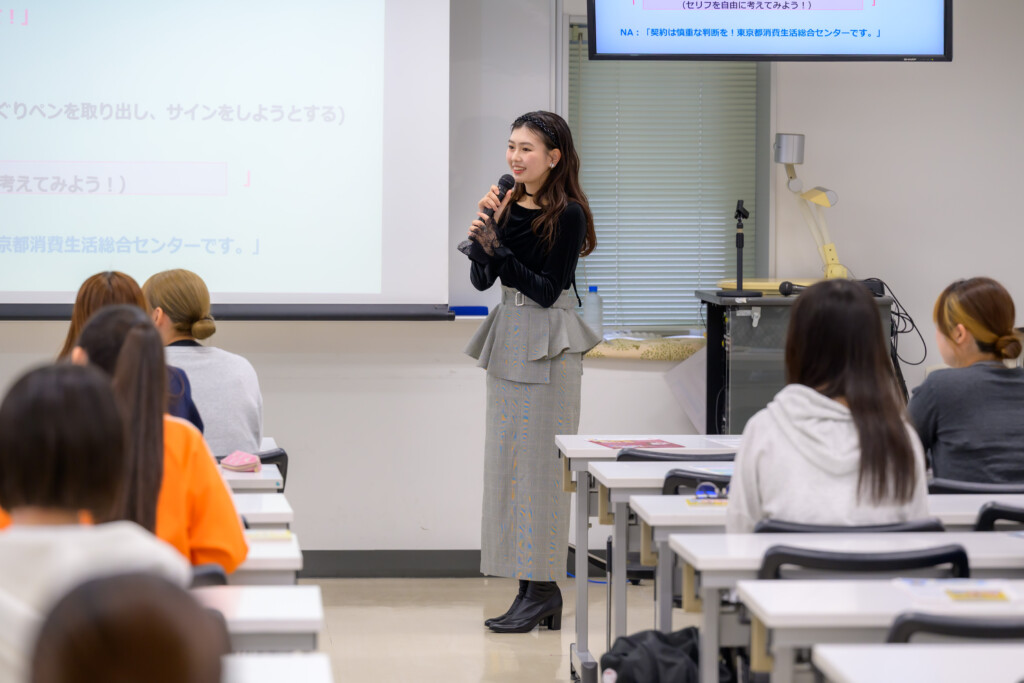
On October 2nd, the "STOP! Consumer Troubles Among Young People" CM Script and Video Contest Traveling Caravan was held at Tokyo Kasei Gakuin University's Chiyoda Sanbancho Campus. Talent and influencer Hiroka Nagahama, also known as "Ohinasama," who serves as the ambassador for the event, participated and learned about consumer troubles and CM production together with the students. From the events of the day, we will introduce some hints on how to turn everyday experiences into works.
To communicate with someone, you first need to understand the problems that are close to home.
Starting to live alone, signing up for services yourself, shopping online—student life is full of situations where you have to make your own choices and decisions. Consumer troubles are also a part of this everyday life.
In the first half of the lesson, a representative from Tokyo introduced common problems faced by young people. The video shown featured cases such as a person being charged a fee far exceeding what they expected from the advertisement after calling a company to fix their lost keys, and a case where a person was unable to use or cancel a hair removal service contracted with the promise of "unlimited visits for two years."
The organizers hope that through the process of creating scenarios, participants will come to understand consumer problems as something that could happen to them personally. Simply being told to "be careful" might not be enough to truly grasp the issue, but thinking about how to communicate it to people of the same generation might change how we see it.
An advertisement that caught my attention, or something that piqued my interest during a conversation with a friend—these everyday observations can be clues to finding the theme of my work.
Hiroka Nagahama also joined the students in re-examining what they "thought they knew."
Midway through the class, Ms. Nagahama worked with the students on a quiz about consumer problems. Ms. Nagahama, who turned 18 this year, was sometimes bewildered by the difficult questions and empathized with the students' answers, thinking from their perspective. Her frank reactions and cheerful speaking style put everyone at ease.
One of the quiz questions was, "When you buy a bento box at a store, at what point is the contract concluded?" The students chose "when the payment is made," but the correct answer was "when the store accepts the customer's offer." Ms. Nagahama was also surprised, as she had thought it was when the payment was made. It makes you realize that there are surprisingly many things you don't know about everyday shopping.
Furthermore, in a question asking about where to seek advice when encountering consumer problems,Consumer Hotline "188"It was introduced. Nagahama said, "I'll remember this number."
Discovering things you didn't know or assumptions you had can be a source of inspiration for creating commercials. Thinking, "If I were to share this new information with a friend, what message would I want to convey?" can help you find the message you want to deliver.
Nagahama-san was also deeply moved by the lines written by the students.
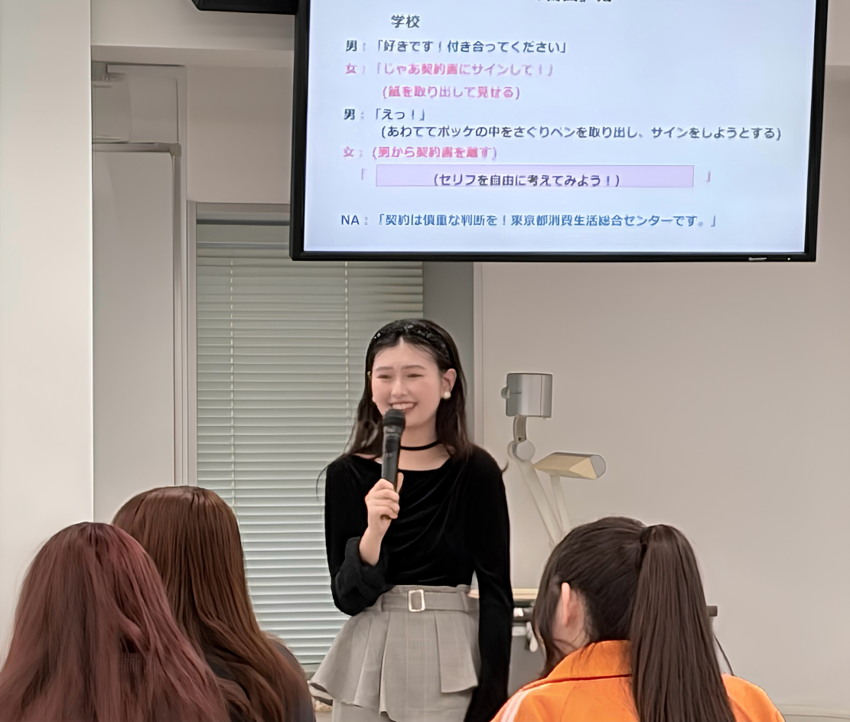
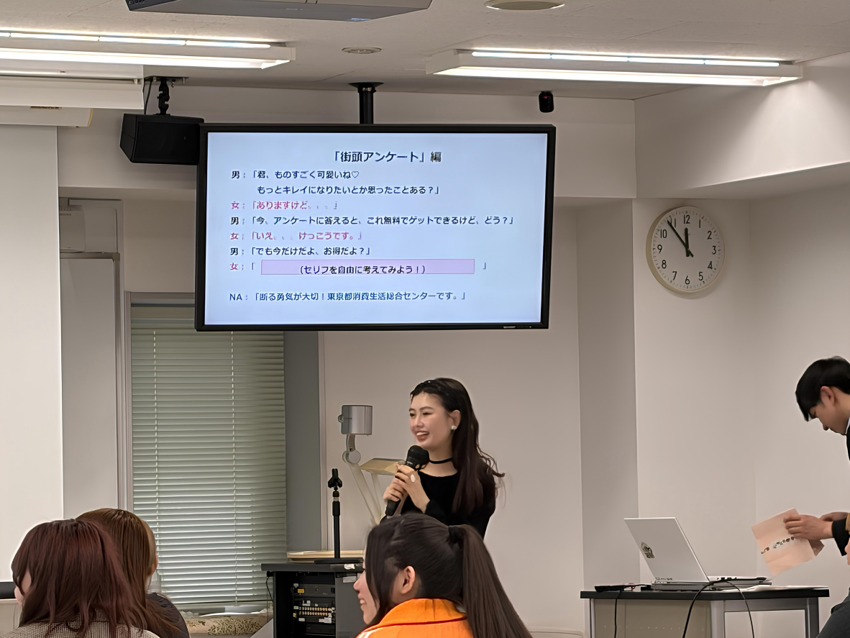
Next up was a "CM Dialogue Comedy" competition, where participants filled in the blanks in lines from past award-winning commercials. Students worked in pairs, coming up with lines that fit the scenes and performing their dialogues.
In a scene where a student was approached on the street with the question, "Do you want to become even more beautiful?" and offered free products, she firmly refused, saying, "I'm already pretty enough, so I don't need them." Ms. Nagahama also empathized, saying that she would have given the same answer.
In a scene where the person she confessed to asks her to sign a contract, the line "Don't just look at my appearance, look more closely at what's inside" appears. Nagahama reacted to this expression, which connects a person's inner self with the contents of a contract, saying, "That really struck a chord with me," and commented that it was an answer she hadn't thought of herself.
Without using difficult vocabulary, everyday conversations and unexpected remarks can become memorable messages. The students' presentations demonstrated the potential of such expressive methods.
Just talking to a friend and asking "What would you say in that situation?" can broaden your ideas.
My baseball experience was a factor in last year's award-winning work.
Examples of students incorporating their own experiences into their work were also presented. The winner of last year's outstanding work award from the same university chose baseball, a sport they had been familiar with since childhood, as their subject.
In the artwork, jersey numbers are used to represent age, and the scene depicts a concentration of batted balls on the player wearing number 19. It uses a baseball game as an analogy to represent how young people are targeted by unscrupulous businesses.
The award winner said that what they most wanted to convey was to make people realize that they are being targeted. The idea stemmed from their own experience during a match, when the ball was repeatedly directed at them, making them feel like they were being targeted.
Combine your familiar world, such as club activities or hobbies, with the message you want to convey. Even if you haven't experienced consumer trouble yourself, you can use everyday experiences in your work.
After receiving the award, she also participated in a "One-Day Director Experience." It was reported that she was involved in the production of a commercial, giving calls such as "start" and "cut" on set.
Seeing a scene you've conceived in writing become a video and reach someone – this is a valuable experience for students interested in advertising, video production, and communication through words.
Creating your first screenplay starts with five steps.
"I'd like to apply, but I've never written a screenplay before." For people like that, the production tips from judge, director, screenwriter, and novelist Shunji Hashizume will be helpful. The explanatory video shown at the venue introduced five steps.
① Observe the theme you will be discussing.
First, start by learning about consumer problems among young people. Then, by focusing on things that have happened around you or things you have experienced, you can create originality in your work.
② Narrow down the message you want to convey.
Trying to cram too much information into a short commercial can make it difficult to understand what you're trying to convey. Decide what you want to communicate most, and if there are multiple points, prioritize them.
③ Explore ideas that capture people's attention.
Once you've decided on your message, think about how to deliver it to the recipient. You can be straightforward, or you can incorporate a slightly unexpected turn of events or a moment that will make them feel a thrill.
④ Imagine the finished video.
Who is doing what, where, and in what setting? What kind of scene and presentation will effectively convey the message? It's important to write while imagining the finished video.
⑤ Read it multiple times over several days.
Things you didn't notice right after writing become apparent when you reread it after some time has passed. Don't try to finish it in one go; reread it and revise it to make it more effective.
Hashizume's call was to write in your own words. Start by asking yourself, "What do I want to convey?" and then think about the scenes and dialogue.
[Application Overview]
• Eligibility: Amateur musicians (individuals or groups) who reside, study, or work in Tokyo at the time of application, and are between junior high school age and 29 years old.
• Submission format: CM script or video. Scripts should be approximately 30 seconds long and can be submitted by directly entering the script into the application form or by uploading a file. Videos should be 30 seconds long and are accepted in MOV or MP4 format.
• Entry fee and number of entries: Free. There is no limit to the number of entries per person.
• Application requirements: Include one or more messages from the following: "Don't fall for fraudulent business practices targeting young people," "Be careful when signing contracts," and "Make use of consumer affairs centers." Finally, include the words "Tokyo Metropolitan Consumer Affairs Center" at the end of your entry.
• Submission Requirements: Works must be unpublished and unreleased, owned by the applicant, and must not infringe on the copyrights, portrait rights, or other rights of any third party. Please avoid depictions of existing products or services, or expressions that evoke them.
• Prizes: 16 winning entries (3 Excellence Awards, 3 Special Jury Prizes, 10 Honorable Mentions). The 3 Excellence Award winning entries will be made into 30-second commercial videos.
• Application deadline: Friday, October 16, 2026
• How to apply: Apply through the application form on the official website.
https://www.cmcontest.metro.tokyo.lg.jp/
*The copyright of winning entries will be transferred to the Tokyo Metropolitan Government, and the works may be edited or modified. Please check the application guidelines on the official website for specifications of submitted data and other important information.
Student Newspaper Online, June 2, 2026, Interview by Tsuda University 4rd year student, Karin Ishimatsu
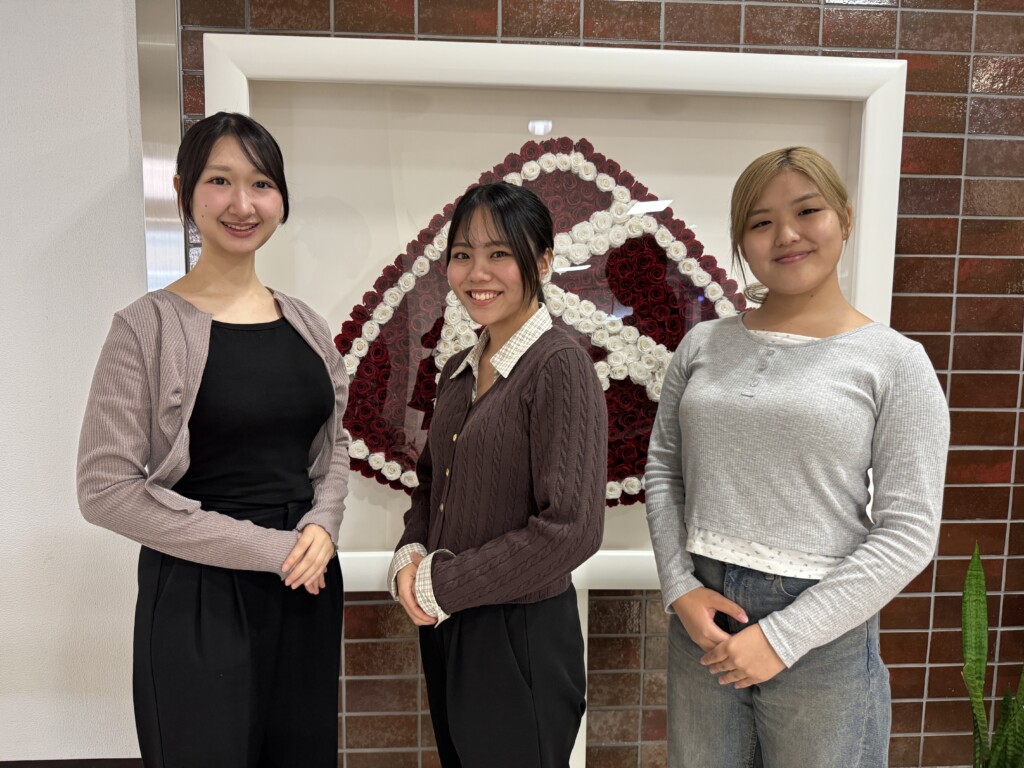
Karen Araki, 2nd year student at Kyoritsu Women's Junior College / Karin Ishimatsu, 4th year student at Tsuda University / Aya Tajiri, 1st year student at Nihon University
List of related articles

Actor Karma
President and CEO of Skylark Restaurants Co., Ltd. ...

Ogawa Miyu: My goal is to express myself through acting

As Partners Co., Ltd. President and CEO Uemura...

8th National Tofu Fair

Katsunori Ueda, President and CEO of Nippon Enterprise Co., Ltd.

“Dai-ichi Life D.LEAGUE 20-21” begins

No comments yet.